
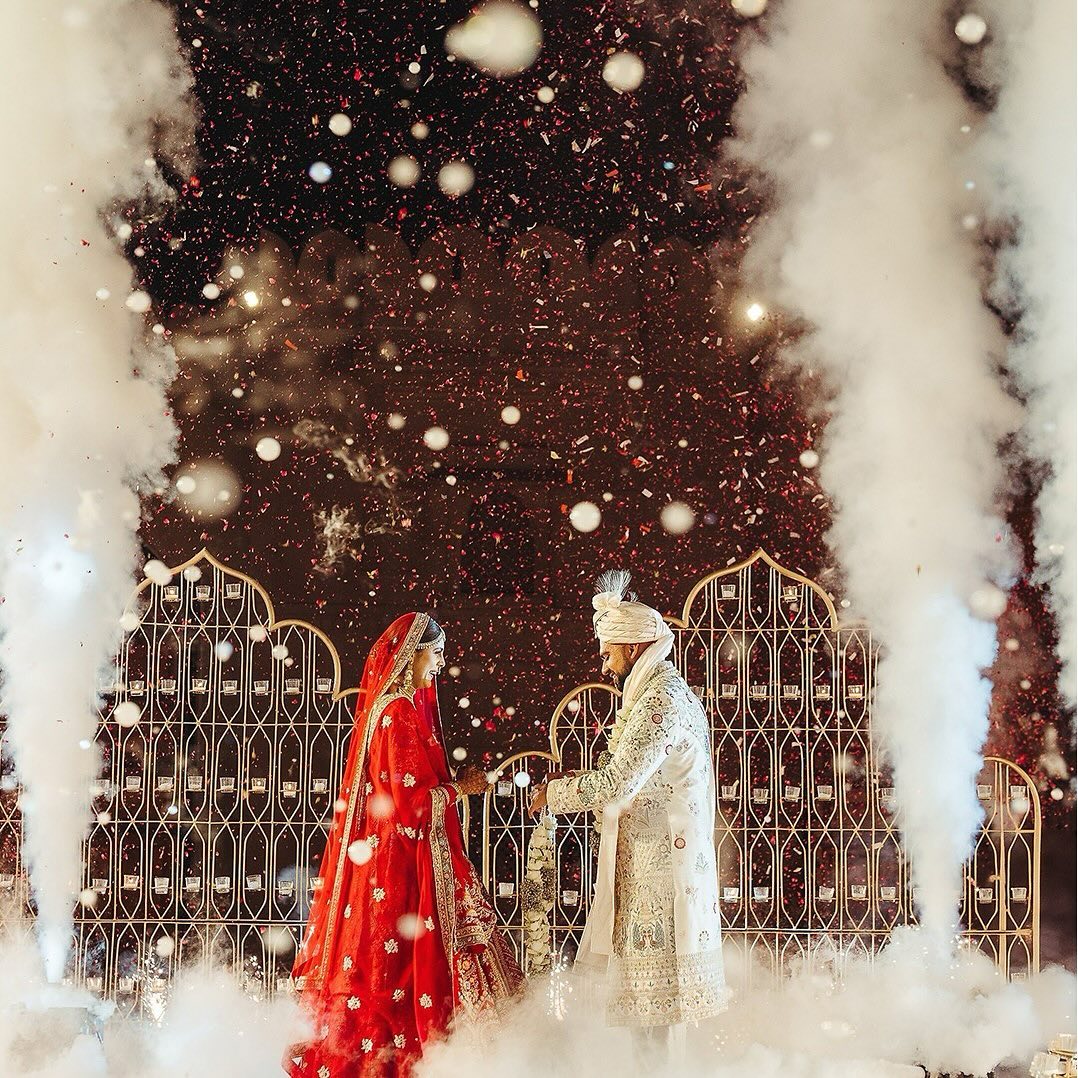
A New Kind of Pre-Wedding Night
Sufi Night has become one of the most requested additions to a Studio Eventz wedding itinerary, usually slotted between the Mehendi and the Sangeet as a slower, more atmospheric evening after two days of high-energy celebration. Where a Sangeet runs on choreography and confetti, a Sufi Night runs on mood: a live qawwali or Sufi vocalist, low floor seating, incense, and a colour and material palette borrowed from Marrakech and Fez rather than the marigold-and-mirror look of a typical Rajasthani function.
The pairing works because qawwali and Sufi devotional music share a meditative, circular quality with Moroccan majlis culture, even though the two traditions come from different parts of the world. Guests sit low, close to the performers, and the room is lit almost entirely by flame and lantern rather than stage wash. For a couple who has already thrown a big, loud Sangeet, this is the evening that photographs best and tires guests out the least.
Setting the Palette: Jewel Tones Over Marigold
Swap the Rajasthani gold-and-marigold palette for deep jewel tones: emerald velvet, sapphire silk, and burnt-orange and saffron drapes layered with gold embroidery. For a 250-guest Sufi Night, we typically work with 12 to 15 fabric tones across drapery, cushion covers, and table runners rather than one dominant shade, so the room reads rich rather than flat. Brass, copper, and aged mirror-work replace the crystal and glass finishes used for a Sangeet stage.
# Fabric and Texture Layering
The Majlis Lounge Layout
A Sufi Night should never use banquet rounds. Replace them with a majlis layout: low brass and mother-of-pearl tables surrounded by floor seating, arranged in clusters of 8 to 10 guests rather than long rows. For 250 guests, plan for 22 to 25 seating clusters, leaving generous walking aisles of at least 5 feet so servers carrying tea and refreshment trays can move freely.
# The Performance Circle
Lighting: A Thousand Small Points Instead of One
The single biggest mistake couples make is lighting a Sufi Night like a Sangeet, with moving heads and colour washes. It should be lit almost entirely by warm, low sources. For a 250-guest setup we typically hang 40 to 50 hand-cut brass and coloured-glass Moroccan lanterns at varying heights, supplement with 800 to 1,000 tea lights across the tables and pathways, and use only one or two soft amber follow spots on the lead vocalist. Keep the colour temperature under 2,700K throughout the room.
Sound and Scent
Book your qawwali or Sufi ensemble at least 8 weeks out for peak season between October and February; the best groups touring Rajasthan get reserved quickly. Layer in scent deliberately, with bukhoor or oudh incense burned in brass censers near the entrance, and a mint or saffron tea service passed continuously through the evening rather than a single beverage station. These two details, more than any single piece of decor, are what guests describe as making the night feel transporting rather than themed.